Leading Under Pressure
Years flying C-130s taught me that leadership is not about having all the answers. It is about making decisions when the cost of indecision is higher than the cost of being wrong.
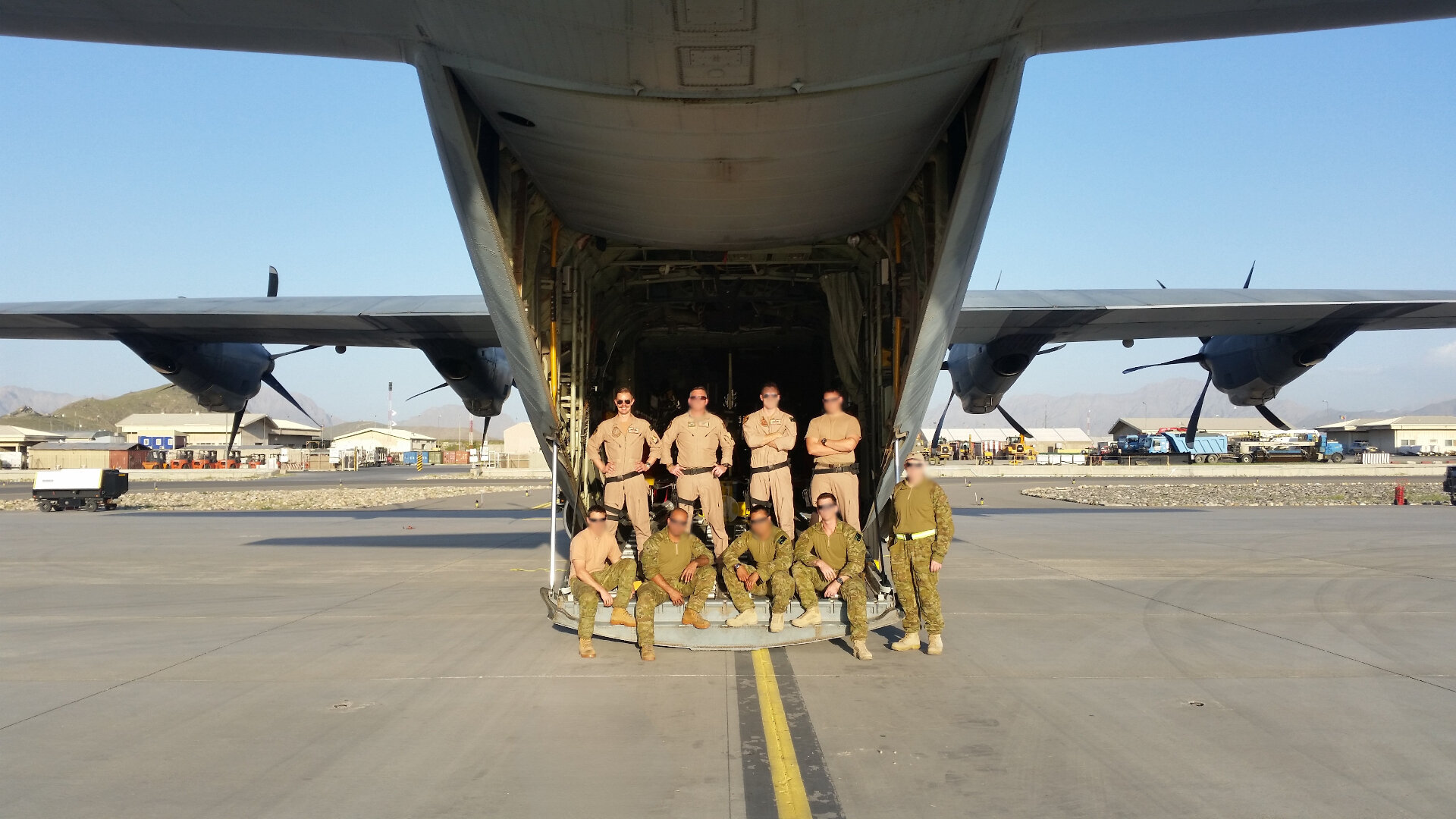
The cockpit as a leadership lab
In 2015, Cyclone Pam tore through Vanuatu and left an island nation cut off, with communications down, infrastructure damaged, and a very narrow window before the secondary effects of disaster started to bite hard. Clean water, medical supplies, immediate aid, all of it had to get in quickly. I was the mission planner for one of the first C-130J Hercules flights in, and then I flew it. Somewhere out over the Pacific, heavy with cargo and fuel, we approached the point of no return. If we pressed on and the runway at Port Vila was unusable, we would not have enough fuel to come home. That is not metaphorical pressure. That is actual pressure. We gathered what information we could through patchy communications, reviewed it as a crew, made the call to continue, then landed low level using night vision goggles with the runway lights out. A few hours later, larger aircraft were able to come in behind us and bring in far more aid. That mission has stayed with me because it captures the essence of leadership under pressure. You do not get complete information. You do not get a neat spreadsheet. You build the clearest picture you can, make the best decision available, and accept that waiting for certainty is often the worst decision of all.
Military flight training is brutal, mostly because it is designed to teach you how to learn. Every sortie is planned, flown, then debriefed in painful detail. There is very little applause for doing what you were supposed to do. There is plenty of specific, constructive criticism about what needs to improve. And there is a strong culture that says it is perfectly acceptable to admit you are wrong, ask for help, and fix it quickly. What is not acceptable is repeating the same mistake because you were too proud, too sloppy, or too slow to learn. If you did not learn, you failed. That was it.
What I took from that environment was not hardness for its own sake. It was a deep respect for learning velocity. Flight training teaches you to automate the routine so you can think clearly about the non-routine. Workcycles, checklists, callouts, cockpit scans, and emergency drills all exist so that simple tasks become second nature and the human brain is reserved for judgement, trade-offs, and adaptation. That idea feels even more relevant now than it did then. Good teams, like good cockpits, automate what can be automated so people can spend their energy on cognition. Today, that might mean AI handling repetitive actions while humans stay focused on the decisions that actually matter.
The best learning cultures are not soft. They are honest.
What tactical airlift teaches you about decision-making under uncertainty
Flying tactical airlift teaches you very quickly that perfect information is a fantasy. Weather changes. Intelligence is partial. The runway may not be what you were told. Threats evolve. People still need the cargo. You still have to make a decision.
That is where a lot of leadership theory falls apart. In real pressure environments, the leader is not the person with complete information. That person does not exist. The leader is the person who can gather the best available inputs, orient the team around a shared picture, decide while there is still time for the decision to matter, and then keep evaluating the outcome as conditions change. In the cockpit, rank is far less important than expertise. Everyone on board holds a piece of the puzzle. The job is to pull that together quickly and make the call. That is why aviation leadership has always felt more useful to me than the caricature people often have of "military leadership". It is not really about command. It is about synthesis, judgement, and timing.
That experience is why I have always believed that the cost of indecision is often higher than the cost of being wrong. A bad decision can sometimes be corrected. No decision leaves you sitting still while the environment makes the decision for you. One of the most useful ideas I carried from military life into business was the concept of decision-making velocity. If you are broadly directionally correct, making more decisions faster can often outrun making fewer decisions slowly and "perfectly". I have seen too many companies become exhausted by indecision disguised as prudence. The energy drain is enormous. Once you get the organisation moving, you can adjust, refine, and course-correct. But first, you have to move.
That does not mean every decision should be made recklessly. One of the other frameworks I like is thinking about one-way doors and two-way doors. Some decisions are hard to reverse, so they deserve more care. Most decisions, however, are reversible. They are two-way doors. You can try something, observe the result, and roll it back if it is not working. In growing companies, leaders often overburden themselves by treating too many decisions like one-way doors. That slows everything down. Fast decisions on two-way doors, followed by honest review, are a feature of healthy teams, not a bug. In fact, if a manager makes a fast decision on a two-way door, sees that it is wrong, and puts their hand up to reverse it, I see that as a positive signal. It means the system is learning.
Under pressure, clarity beats certainty.
Translating military leadership to business
When I left the Air Force and moved into consulting, I discovered something interesting very quickly. A lot of people assume the military's main gift to business is structure. I do not think that is right. The real gift, at least in my experience, is mental agility inside systems.
The Air Force taught me how to understand a system well enough to move within it intelligently, take advantage of its strengths, mitigate its weaknesses, and still achieve the outcome. That is different from blindly installing more structure. When I moved into the corporate world, first at Pollen and later at Deloitte, I realised that my most useful skill was not bringing in heavy hierarchy. It was understanding the right level of structure at the right time. I think of it as scaffolding, not structure. Scaffolding helps a building rise in the right direction without becoming the building itself. Good organisational cadence works the same way. Meetings, decision rights, communication flows, and accountability are there to support growth, not suffocate it.
That is where cadence and operating rhythm come in. I have become a big believer that most companies do not need more meetings. They need a better heartbeat. By cadence, I mean the way the organisation makes decisions, sets accountability, reviews progress, and keeps information moving. By operating rhythm, I mean the way people talk, meet, escalate issues, communicate across functions, and stay aligned without being shackled. If you get that right, you create a company that learns in the flow of work rather than stopping periodically to work out what just happened. The structure is there, but it is light. It is enough to allow learning loops to function without stifling them. That distinction matters a lot, particularly in early-stage companies and in regulated environments where some structure is essential, but too much structure becomes a tax on growth.
The other thing that translated strongly was mission. In the Australian military, people understood at a high level why the organisation existed: to defend Australia and its interests. Whatever your role, you knew what you were contributing to. The corporate world often struggles to build that kind of clarity because goals are usually more commercial and less existential. But I came to believe that the best companies can still create their own version of it. A big, clear goal that people can rally around, paired with a culture that makes people feel psychologically safe enough to speak, disagree, and take risks. What I found in consulting was that the best parts of modern workplace culture, inclusion, openness, psychological safety, can be combined with the best parts of military mission culture to build something very powerful. That is the blend I have tried to build ever since: mission-driven team culture supported by operating rhythm as organisational infrastructure.
The goal is not more structure. The goal is the minimum scaffolding required for the company to learn and move in the right direction.
The frameworks that transferred, and the ones that did not
A lot transferred from the Air Force into business. Some of it came across almost cleanly. Some of it needed translation. Some of it, frankly, does not belong in a company at all.
The things that transferred best were workcycles, debrief culture, mission clarity, and calm under pressure. Workcycles matter because they make the basics automatic, which frees people to focus on the genuinely hard calls. Debrief culture matters because it creates an honest learning loop. Mission clarity matters because people can endure a lot if they understand what the work serves. Calm under pressure matters because teams take their emotional temperature from the leader. None of that is uniquely military, but the military teaches it with unusual force.
The things that did not transfer well are just as important.
Heavy bureaucracy does not transfer. The value is not in importing chain-of-command thinking into a company. The value is in understanding when structure helps and when it becomes drag. In the military, especially outside aviation, communication can be quite heavily siloed up and down the chain of command. That is exactly what I try to avoid in business. Companies need clean lines of communication, but they also need lateral information flow. Product needs to talk to operations. Commercial needs to talk to engineering. Delivery needs to talk to support. If communication only moves vertically, the organisation becomes blind in the middle.
The other thing people get wrong is command. In the Army, orders are given. In a cockpit, if you give an order, you have already lost the battle. A high-functioning cockpit depends on persuasion, trust, and shared situational awareness. You need the crew to speak up, challenge assumptions, surface weak signals, and commit once a decision is made. That feels much closer to how the best executive teams work. If a company only moves because the most senior person issues instructions, something is broken. Strong companies run on alignment, not intimidation.
That is why I have always cared about clear ownership as well. Shared accountability is usually a polite way of saying no one really owns the outcome. One of the most useful things I learned over time is that leaders and managers should own problems end-to-end where possible, with clear levers, clear scope, and a safe forum in which to say, "this is not working, I need to change course." If people know the review rhythm is there, if the culture supports course correction, and if accountability is genuinely clear, teams move faster and with far less fear.
I also learned that military critique needs translating. Flight training can tolerate a harsher feedback environment than most companies should. In the cockpit, sharp correction can save lives. In a business, particularly one trying to innovate, people still need direct feedback, but they also need belief. They need to know what is working, where they are improving, and what good looks like. Otherwise you build an organisation that is technically sharp but emotionally flat. That is not sustainable. The useful transfer is honest feedback tied to better performance, not institutional severity for its own sake.
The real transfer is not command and control. It is clarity, learning, and decision velocity under pressure.
What that means for how I lead now
When I think about leadership now, I think much less about authority and much more about architecture.
How do I build an environment where people can think clearly, speak honestly, decide quickly, and learn continuously?
How do I install just enough scaffolding that the organisation compounds in the right direction?
How do I keep decision velocity high without sacrificing judgement?
How do I create a mission that is real enough to rally people, but concrete enough to guide daily work?
How do I make sure information flows sideways, not just up and down?
Those questions are the real inheritance from the Air Force.
It did not teach me to have all the answers. It taught me how to make decisions when the answers are incomplete and the cost of delay is rising. It taught me how to build workcycles so people can preserve their cognitive energy for the hard calls. It taught me how to create teams that can operate well under pressure because the rhythm is clear, the mission is clear, and the learning loop is alive.
That is still how I lead.
Leadership under pressure is not about certainty. It is about building the conditions in which the team can find the right answer quickly enough for it to matter.